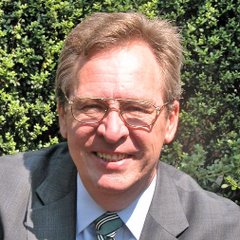
Wednesday, July 23, 2008

A letter to the European Executive Directors of the World Bank Group

Dear Friends

As a former Executive Director at the World Bank; as a Venezuelan citizen of European descent; as a holder of a passport of a European country; and foremost as someone who harbors a deep respect for the international workers and profound concerns about the future of the world at large, I respectfully ask you to consider the following:

No matter how the Chairs at the World Bank's Board of Executive Directors are realigned between countries that are all anchored to their local interests the fact is that the world itself, our planet earth, will never be sufficiently represented.

Given the ever more intensive cross border relations, in so many vital affairs, there is an urgent need to introduce at least some representation of truly global interests and perspectives at the Board; such as those represented by the migrant working communities and which if all added currently represent an economy the size somewhere between India and China.

Unfortunately there is no way something of this nature could be handled expeditiously through a process that requires political negotiations over the whole world; and so in this respect I ask of the European Executive Directors at the World Bank, to take turns lending out, just one year at the time, their respective shares and voting powers in order to accommodate the continuous presence at the Board of the World Bank of a Chair that represents the views and the interests of the migrant working communities.

The previous, which of course does not imply a permanent commitment or a final reallocation of shares, would allow Europe to speedily enact a pilot on global governance that could prove to be extremely valuable for the whole world.

Europe is of course free to use whatever procedure it feels appropriate for naming the Director for the migrant worker's community; and although we would all understand if this at first would perhaps favor the migrant working communities in Europe, or Europe's own migrant worker communities, we sincerely hope that, in time, other parts of the world are also provided an opportunity.

Yours Sincerely

Per Kurowski

Friday, June 20, 2008

A letter in Washington Post: An Aspect of the Bubble

An Aspect of the Bubble

The June 17 installment in the front-page series "The Bubble," though comprehensive, missed one vital piece of the subprime mortgage puzzle. The accompanying glossary defined a "credit rater" as "a company that Wall Street and investors rely upon" to provide analysis but did not tell us that a credit rater's credibility is foremost based on the rater's having been appointed by bank regulators. This arrangement sent the market the loud, clear and false message that risks could be precisely measured and that these entities were capable of carrying out this mission.

Nothing whetted the appetite for securities collateralized with plainly lousy mortgages as much as the combination of high returns and prime credit ratings. Using a regulatory system for banks that is based on following the credit rating agencies will, given that it is human to err, lead us into even greater danger.


A letter in the Washington Post: "An Aspect of the Bubble"

An Aspect of the Bubble

The June 17 installment in the front-page series "The Bubble," though comprehensive, missed one vital piece of the subprime mortgage puzzle. The accompanying glossary defined a "credit rater" as "a company that Wall Street and investors rely upon" to provide analysis but did not tell us that a credit rater's credibility is foremost based on the rater's having been appointed by bank regulators. This arrangement sent the market the loud, clear and false message that risks could be precisely measured and that these entities were capable of carrying out this mission.

Nothing whetted the appetite for securities collateralized with plainly lousy mortgages as much as the combination of high returns and prime credit ratings. Using a regulatory system for banks that is based on following the credit rating agencies will, given that it is human to err, lead us into even greater danger.


Monday, April 28, 2008

Does prudence in banking really have to mean purposelessness?

What is more prudent for the bank regulators, to work exclusively at avoiding the default of banks and the occurrence of a bank crisis, or to ascertain that the banking system serves a purpose for the society? These days when it has been demonstrated that the bank regulators are failing in their self imposed limited scope of functions; and indeed through the creation of the current structure of minimum capital requirements for the banks and the appointment of the credit rating agencies as risk commissars have themselves contributed to create new systemic risks, is it not time for us to take a big step back and, before digging us deeper in our regulatory hole, ask ourselves what is the purpose of our banks? Aren’t you as fed up as me having a purposeless banking sector? If we absolutely have to live with risk avoidance based regulatory system, can’t we at least start measuring units of default risk in terms of decent jobs created, youngsters educated or environmental threats avoided? Risk is the oxygen of development and so please let us not kill risk taking!

PS. My 2019 letter to the Financial Stability Board (FSB)

Thursday, April 17, 2008

Dani Rodrik’s misguided activism on the use of international arbitration

Dani Rodrik in an article he circulated through his blog and titles “Thinking about governance” dated March 24, 2008 has the following to say about international arbitration.

“Suppose your growth economist identifies a poorly functioning legal system and the attendant uncertainty as one of the binding constraints on growth. One solution of the “governance-in-the-small” type is to “outsource” part of the country legal system to the outside world. The government can accomplish this, for example, by signing on to bilateral investment treaties (BITs) with major trading partners. These typically have arbitration clauses that enable foreign investors to seek redress under foreign jurisdictions in a variety of circumstances. One can presume that such clauses increase the comfort factor for foreign investors and that they may therefore help overcome the identified growth constraint. But is this strategy also good for governance-as-an-end? Probably not. Aside from creating an unhealthy distinction between domestic and foreign investors—the latter have the extra protection but the former don’t—such outsourcing of legal powers does nothing to strengthen domestic legal institutions. Insofar as it removes an important source of pressure for legal reform, the outsourcing may even delay the establishment of a healthy judiciary.”

I am sorry. I always listen carefully to what Dani Rodrik has to say and I usually agree but on this issue he sounds too much like your innocent and friendly neighborhood activist, or a consultant to governments, and his conclusions are, using his terminology, far from being first or second best.

Rodrik’s argument that the use of international arbitration does create “an unhealthy distinction between domestic and foreign investors”, ignores that most often those differences exist anyhow; and also that “the outsourcing may even delay the establishment of a healthy judiciary”, when it could just as easily help it along, by shoving it into the face of local investors how unfairly they are often treated by their own governments.

Of course the existence of local justice is of utmost importance, but so is the existence of a strong international systems that can help to settle disputes, since no matter how you look at it, in the long run it is always the weaker who will benefit the most from having access to well functioning international justice…since the strong is strong even without such systems.

Please, let us not confuse the tremendous, shocking and hurting disappointments that many development countries might have had with the international grievance mechanisms, with the fact that many or most of the contractual obligations brought up to arbitration were drawn up without properly considering the implications of having to submit to these mechanisms.

Instead of throwing away the international grievance mechanism with the bathtub water, help the countries to learn from their experiences and so they will duly consider the real implications next time they sign up a contracts with a foreign investors.

Much the contrary from what Rodrik holds, if our governments in many developing countries learn that they won’t get away that easy, they will also learn, little by little, that’s the pace of development, to negotiate better and more seriously… and from this it is very clear that the local investors are the one who stands most to benefit, long term.

Remittance fees: The tip of the tip of the tip of the iceberg

The remittances are to migration like the part of the cash dividends from corporations that you send to your grandmother and children are to the economy… just the tip of the tip of the iceberg!

Of course the cost of sending those remittances can only be the tip of the tip of the tip of the iceberg.

There has been an incredible fixation by many institutions with the fees charged by the banks for the service of making the remittances. Yes, of course it is good that these fees become more competitive but it is almost laughable to think about all the resources used up in analyzing this very minor issue in an immigrant’s reality.

Just the money spent on communicating by telephone with home, or buying yourself over the borders, or the costs derived from not having a driver license and living in cramp living quarters, surpasses by far the sum of all the fees paid to the banks. So please stop talking so much about the fees, and help the immigrants to make more money instead… with which they would happily pay even higher fees to the banks, if so asked. Talk about shortsightedness!

That is what I said over and over while I was an ED at the World Bank; and that is what I wrote in my book Voice and Noise; and that is what I kept on saying thereafter in all the many conferences on remittances that I have assisted to… to the extent that I now almost feel embarrassed for them.

Yet, years later, I still have to be asking: How many more millions in research, conferences and publications are the development institutions to waste on this really silly and minor aspect of the migration issue?

Please help the migrants make more money instead!

Wednesday, April 16, 2008

A good lender or just another kneecap breaker?

There are a lot of recent writings that tells you that financing the downtrodden is good business. No news there! Scrooge and the mafia have known that for a long time. If you can get an average rate of interest high enough so that the good debtors cover the bad …you’re in business.

Suppose a group A of 100 borrowers and you lend to each one of them $1000 and that in order to cover your costs you would need to charge an interest of 10% if all of them duly repaid their loans. Then, if you charge a rate of 11 percent to all your profits would be $1.000 equal to 1% on your total lending.

But if a group B has 10 per cent of the debtors not repaying anything then you would need to charge 23.3 percent to net the same $1.000 in profits. For a group C, where 30 per cent of the debtors do not paying back any principle or interest, the interest rate applicable needed to obtain the same results need to be 58.6 percent.

As a lender you get exactly the same profit from lending to any of these groups but let me assure you that for those borrowers who do service their commitments paying 11 percent or 58.67 percent is far from same.

Most, if not all of the current analysis of the activities of micro-credit institutions, do not consider the above and so they do automatically conclude that lending to the groups A, B and C has the same development impact, notwithstanding that group C leaves 30 per cent more of its members suffering from not being able to service their debts and the capable having to pay 47.6 percent more in interest rates than if they had been, correctly, de-facto, placed in group A.

It is time that we refine our evaluation systems so as to include in the analysis of the micro-credit finance institutions their respective repayment distribution curves. Otherwise, we will not be able to separate the good lenders from the kneecap breakers. Otherwise we are more than showing any solidarity with the downtrodden forcing internal solidarity upon them just to make a buck.

For instance I invite you to read the document that you could find in CGAP’s web site Measuring Microcredit Delinquency: Ratios Can Be Harmful to Your Health or any other documents, to see if the perspective of the final clients, the borrowers, have been given due considerations.

I cannot say whether CGAP is actually considering this dilemma issue but, if so, it certainly does not seem to be of a too high priority for them; something which could have to do with having too many “bankers” in CGAP to allow for development, different from the development of microcredit institutions, to be considered sufficiently. In micro credits, just like in any other activity, the legitimacy of the profits is also direct function of how they are obtained.

Tuesday, April 15, 2008

We urgently need a carbon-solutions-neutral advisor

Like the obese compulsive eater reaching for his sugar substitute it is amazing to see the growing divergence between how serious our global environmental problems are reported to be and the type of solutions that are put on the table.

As long as you think that you could throw some ethanol, some solar panels, some windmills, some “clean” coal slogans or some recycling of unsold-food-into-energy on those problem… well then it cannot really be that bad.

As long as hurting the environment is considered just venial sins that you can take care of by buying some carbon indulgences… well then it cannot really be that bad.

As long as you could argue to developing countries that they have the right to expect developed countries to foot the bill for confronting their environmental urgencies instead of being forthright telling them not to count much on that and to get cracking… well then it cannot really be that bad.

One of our problem is not so much realizing how serious the environmental problems really are but of how to keep all the green-magical-solution potions peddlers from meddling... which means something like the environment being too serious to be left in the hand of environmentalists.

At this junction what the world needs most is a carbon-solution-neutral agency sufficiently capable and credible to spell out the truths… like for instance that the US has to impose European levels of taxes on gasoline consumption if they are going to get anywhere… and that given the scarcity of resources there are thousand of solutions that are more economically effective than hybrid-cars.

The World Bank does seem as the natural place to host such an agency but this of course could require some shake, rattle and roll, as can be exemplified by the fact that in the Energy Efficiency Portfolio Review and Practitioner's Handbook published by the Global Environment Facility (GEF) and of which the World Bank is one of the implementing agents, there is not a single phrase that defines what on earth, on the earth, energy efficiency really means.

Also in all documentation related to the development of an Investment Framework for Clean Energy and Development I challenge anyone to find a definition of what is meant with clean energy… most probably because that could lead to a more precise definition of what is “dirty energy” which would be quite uncomfortable for some.

Friends, a truly carbon-solutions-neutral advisor would probably not allowed biofuels to even show up for the casting.

Friday, April 11, 2008

My Voice and Noise on the financial sector during the spring meetings of the World Bank and the IMF, April 2008

Risk is the oxygen of development!
It is absurd to believe that the US and other countries would have reached development without bank failures. When the Basel Committee imposes on the banks minimum capital requirements based solely on default risks, this signifies putting a tax on risk-taking, something which in itself carries serious risks. The real risk is not banks defaulting; the real risk is banks not helping the society in its growth and development. Not having a hangover (bank-crisis) might just be the result of not going to the party!

We need to stop focusing solely on the hangovers and begin measuring the results of the whole cycle, party and hangover, boom and bust! The South Korean boom that went bust in 1997-1998 seems to have been much more productive for South Korea than what the current boom-bust cycle seems to have been for the United States.

All over the world there is more than sufficient evidence that taxing risks has only stimulated the financing of anything that can be construed as risk free, like public sector and securitized consumer financing; and penalized the finance of more risky ventures like decent job creation. Is it time for capital requirements based on units of default risk per decent job created?

When is the World Bank as a development bank to speak up on this issue on which they have been silent in the name of “harmonization” with the IMF?

When are we to stop digging in the hole we’re in?
The detonator of our current financial turmoil were the badly awarded mortgages to the subprime sector and that morphed into prime rated securities with the help of the credit rating agencies appointed as risk surveyors for the world by the bank regulators.

If we survive this one and since it is “human to err” we know that if we keep empowering the credit rating agencies to direct the financial flows in the world, it is certain that at some time in the future we will follow them over even more dangerous precipices.

Note: I have just read the Financial Stability Forum brotherhood’s report on Enhancing Market and Institutional Resilience and while including some very common sense recommendations with respect to better liquidity management and “reliable operational infrastructure”; and some spirited words about more supervision and oversight (the blind leading the blind); with respect to the concerns expressed above, bottom line is that they recommend we should deepen the taxes on risks and make certain that the credit rating agencies behave better and get to be more knowledgeable… so that we are more willing to follow them where we, sooner or later, do not and should not want to go.

Do micro-credit institutions make too much use of “predatory ratings”?

Any group of debtors that is charged a higher interest rate because it is considered a higher credit risk is composed by those spending their money servicing a debt that they will finally default on, and those who should have in fact deserved a lower interest rate. Are there any real winners among them?

Who is out there talking about that the extensive use of ratings signifies something like a regressive tax for the poor? Who is out there informing the poorly rated about how very dearly they are paying for their loans? Who is out there analyzing the murdering impact that credit ratings have in chipping away at the minimum levels of solidarity that any society needs to keeps itself a society?

If there is a minimum of things that needs to be done in the world of micro credits that is to focus more on transparent system of incentives that: 1. Stimulates and rewards good group behavior and returns to the compliant borrowers some of the “extraordinary” margins earned. 2. Spreads out the costs of those who cannot make it over a much wider group of debtors.

And, by the way, this applies just the same to the financing of mortgages to the subprime sector.

Wednesday, January 16, 2008

Inclusive financial systems, though generally good, could also be dangerous for the poor

If you have to pay a higher interest rate than what the average borrower pays, you should be extra careful with what you borrow for, as this could otherwise set you back even more.

For instance, if you want to buy a house that has a market value of $100.000 and have the $12.000 for a down-payment, you need a credit for the balance of $88.000. Let’s suppose that you could for that purpose access a 15 years fixed rate mortgage but, because you are considered a subprime risk, your lender requires a very high interest rate of 11 percent, which would require you to pay 1.000 dollars per month.

Had you qualified as a good risk and therefore could have access to for instance a rate of only 6 percent, then your $1.000 monthly sacrifice for the next 15 years would, in present value terms, be worth $118.500. From this we can deduct that if you bought your house under current conditions, at 11 percent, and did not wait until you could access to a 6 percent rate, then you will in fact have paid $130.500 for the house ($12.000+$118.500).

This is a sad truth often forgotten. Of course broad-based and inclusive financial systems can significantly aid financial development, reduce poverty, and expand economic opportunity in developing countries… but sometimes their embrace can also be a bit too rough for many of the poor.

Every time anyone pays a rate higher than the risk-free rate in order to purchase goods or services he is in fact accepting paying a higher price for these and which is of course not the surest way to get out from poverty. If anyone needs to be made aware of this it is the poor in the world.

Many subprime mortgage borrowers in the US are currently suffering from too much inclusiveness and will be made poorer as a result. They harbor no doubts on that they would have been much better of had they been excluded, and there are important lessons to be learned from that.

The World Bank, CGAP and other who share the mission of fighting poverty, after so many years of focusing almost exclusively on the access to finance and the stability of the financial system, need to pause, take a breather, and completely rebalance their approach to these issues.

As a bare minimum we need real proof that these programs have indeed reduced poverty in a sustainable way and not just opened up new opportunities for financiers. As a bare minimum “Financial education of the poor” needs to appear among the strategic priorities…currently it does not!

This has not only to do about guaranteeing that the interest rates are reasonable but also with the fact that even taking on debt at reasonable rates might be extremely unreasonable.

Personally I feel there are too many bankers and too few debtors (perhaps none) included in the above programs, and that is a guaranteed way to introduce bias.

Saturday, January 12, 2008

If knowledge suffices then wisdom is superfluos

The least I seek here is to try to transmit wisdom, since I am too well aware of how correct Hermann Hesse was when in Siddhartha he wrote 'Wisdom is not communicable. The wisdom which a wise man tries to communicate always sounds foolish...Knowledge can be conveyed, but not wisdom."

And much less do I seek to transmit something as a wise man, since I recognize well the impossibility of being one; something clearly summarized by Socrates arguing that the only possible human wisdom is to know oneself not wise, or only possessing wisdom absolutely devoid of value.

But both you and I, perhaps not in our minds, but definitely in our hearts, nonetheless know, or intuit, or want to believe, there is someone who is wiser than other. Where? We do not know, surely not among the besserwisser. Where then? Assuming it has to do with God is a good start.

I say this because in a world with so much information and so much knowledge, time after time we face the dilemma of if knowledge is enough, then wisdom is superfluous and worthless; and I fear that those words contain the danger that we will get bogged down forever in a knowledge dictatorship.

With no doubt our society is being increasingly cornered by producers and worshipers of information and knowledge, who do not leave space enough for questioners to put their information and knowledge in a more correct perspective.

The above occurs in all fields. For example, in the financial area that is the only possible explanation for why our financial regulators so ingenuously assigned so much power of decision over the financial flows to some few and humanly fallible credit rating agencies.

What a pity that nobody read to regulators from the Apology of Plato, where speaking as Socrates says. "Artisans have real knowledge of their arts, but take that to mean that they are most wise with respect to the most important matters”. As I see it this hubris filled petulance spoils all their knowledge. 

And how do we rid ourselves of that knowledge dictatorship without having, like some of our primitives, resort to that remedy worse than the disease that is the cult of dis-information and ignorance? 

That’s not easy, but at least I think we have a better chance of doing so if we can prevent the configuration of incestuous technocratic majorities in our decision-making bodies. Multidisciplinary teams, with great variety of experience and lots of humility, are the ones that should configure our boards and ministries.

I introduce the factor of humility, because one of the main reasons the world is going through current financial turbulence, is because many expert professionals simply did not know, or did not dare to recognize, as Socrates did, that they did not understand anything of what they were approving.

Friends, let us remember that not understanding what happens, not necessarily make us less aware of what is happening.

Sunday, November 11, 2007

Do the financial risks add up to a constant number?

I am no physicist and one my biggest frustrations is how little I really get to understand of what the greatest thinker that has coincided with my life span, Albert Einstein, explains. Therefore I might be completely off the wall when I refer to having heard something like that the mass of the university, though it can take many shapes, is by the end of the day always a constant number.

Nonetheless these line of thoughts have lately crossed my more financially oriented mind when exposed to facts that seems to suggest that no matter what we do with the risks, no matter how we hedge them, no matter where we hide them, at the end of the day their amount could remain a constant. If this proves correct then it must have great implications for how we design or perhaps even abandon our efforts to design our regulatory systems. At least it would not be so easy for our current bank regulators to go into their total immersion of risk adverseness, expecting to be applauded, if we knew that all they were doing was pushing the risks around.

Saturday, November 10, 2007

We must allow our banks to be banks again

Our commercial banks besides being able to repay our deposits are supposed to help generate the economic growth that creates decent jobs and to distribute the opportunities in the society to those most able…otherwise a mattress would suffice.

Bank regulators, through the Basel Accord, 1988, and all the ensuing regulations, created a methodology for calculating the minimum capital requirements of the banks that was exclusively based on the perceived risk of default in their lending operations. And they followed it up by appointing the credit rating agencies as their commissars or official risk perceivers.

The above immediately created a world of opportunities and perhaps even needs for regulatory arbitrage and which has now degenerated in the current state of general and absolute incomprehension about what is going on.

The promised risk elimination has just turned out to be the hiding and the dangerous accumulation of risks. In my country whenever there is a tremor everyone applauds as these help keep the big earthquakes away, but Basel is only managing to keep the tremors away.

To further evidence the current confused state of affairs in developing countries we see how the banks finance more and more the public sector and securitized consumers instead of entrepreneurs; and in develop countries we frequently find more courses that analyze how credit rating agencies might change their opinions about a firm than courses about how to analyze the finances of a firm.

Now if we are ever going to have a chance of getting out of this mother of all the financial imbroglios there cannot be much doubt that we urgently need to start doing some back tracking on our current bank regulations… and allow our banks to be banks again.

Wednesday, October 10, 2007

There are risks in shying away from risks

Friends and development experts, would you please comment on the following

When the Bank Committee of Basel decided on the minimum capital requirements methodology they loaded up new expenses on the credits already more expensive because they were perceived to be of higher risks and this resulted in the introduction of a regulatory bias against risk taking in the commercial banking sector.

It is indeed sad when a developed nation decides making risk-adverseness the primary goal of their banking system and shies away from risks and places itself voluntarily on a downward slope, but it is a real tragedy when developing countries copycats them and also fall into the trap of calling it quits.

More from this perspective on http://www.subprimeregulations.blogspot.com/

Tuesday, October 02, 2007

There is a dangerous regulatory arbitrated run towards safety

Credits which are perceived as having a lower risk than others have a natural market advantage that translates into lower interest rates. But the bank regulations that have been developed by the Basel Committee on Banking Supervision, by applying minimum capital requirements based on the risks perceived by the credit rating agencies, have added through their regulatory arbitration an additional and artificial benefit that biases the market in favor of "low-risk" credits.

The above is producing a run towards either a more objectively "safe portfolio" or providing further stimulus for "risk-hiding". Since the largest needs for development do not ordinary make a living in the land of the low risks it is clear that development finance is the largest victim from this run and we could even say that the development power of the commercial banks in developing countries has as a result been severely diminished.

But also developed countries will pay for this, not only as already evidenced by the subprime-mortgage mess, but also since no society can survive as viable maximizing risk avoidance. As I see it our future generations will pay dearly for this baby-boomers invented run to safety.

Monday, September 17, 2007

Do we then need two World Banks?

Krishna Guha and Eoin Callan in the Financial Times of September 13 and in reference to a report on the role played by the World Banks internal anti-corruption unit the Department of Institutional Integrity (INT) were told by Paul Volcker, the main responsible for that report, that “his inquiry had ‘reconfirmed’ there was ‘ambivalence’ in the bank as to whether they really want an effective anti-corruption program or not”. 
Wrong! Having been an Executive Director at the bank (2002-2004) I sincerely believe that an overwhelming majority of the bank staff clearly comes out in favor of more and better anti-corruption efforts but that these do not come into fruition only because part of the management, rightly or not, believe that these could hinder the bank from operating efficiently… at least as they wish for it to operate for whatever reason efficiently. 

If we discuss “ambivalence” then perhaps we should also discuss what Volcker’s report does not touch upon and that is perhaps the single most outstandingly ugly blemish on the World Bank’s reputation. To see what I refer to please search out INT on the external website of the World Bank and then click on the list of Debarred Firms and Individuals. On that list you will find, duly named and shamed, the names of many individuals that one way or another after a due process have been considered involved in corruption, but that list does not include one single name of those officers of the World Bank that presumably must also have been involved in these acts of corruption one way or another. Susanne Folsom the Director of INT, on a Q&A session on that same site mentions, “We’re often asked why we don’t publicly name Bank staff who are terminated for fraud and corruption as well. The Bank’s rules don’t allow such disclosures….” 

What credibility can you get naming others while not being willing to name your own? It might very well be that the “ambivalence” on anti-corruption in the World Bank is insurmountable but if so perhaps what we need is to have two world banks since the world definitely needs one that comes out completely and unabridged against corruption. And mind you I am far from being a zealot on this issue, since life has taught me well that zealousness frequently carries within its own even more dangerous breed of corruption.

Wednesday, August 29, 2007

Please...while you are busy leaving Iraq


Excessive weight given to credit rating agencies guarantees systemic risks

As an Executive Director I got invited to make some comments at a "Risk Management Workshop for Regulators: Assessing, Managing and Supervising Financial Risk" arranged by the World Bank in Washington during the week 27 April – 2 May 2003. This is what I told them about the credit rating agencies.

“I simply cannot understand how a world that preaches the value of the invisible hand of millions of market agents can then go out and delegate so much regulatory power to a limited number of human and very fallible credit-rating agencies. This sure must be setting us up for the mother of all systemic errors.”

I never got invited to speak to them again.

You could read more on this subject in my blogs:

http://www.subprimeregulations.blogspot.com/ and

http://teawithft.blogspot.com/ looking up under the labels of credit rating agencies and subprime banking regulations.

Thursday, August 23, 2007

And why does not the US use the World Bank for their infrastructure needs.

Felix Rohatyn and Warren Rudman in “Federal action is needed to rebuild America” Financial Times August 23, come out in support of a proposal for a new bank to address “the critical needs of infrastructure”. This, at least in Rohatyn’s case, being from the private sector sounds a bit surprising. But, if they are right, why would the US need a new bank for that? … when there is International Bank for Reconstruction and Development, IBRD, better known as the World Bank.

Not only would the US by using the World Bank set a great example and help to scale that institution for some really big globalized action that might be needed but also, at least for a start, the World Bank would probably be quite covenant lite… sorry I mean conditionality lenient with the US.

Sunday, July 29, 2007

The local web correspondent

I have an idea that I am going to present to the press and other media and just in case I can patent it or at least to avoid that someone else patents it am jolting it down here and I will publish somewhere on one of my many blogspots.

I believe that a newspaper that creates a special very local page for local communities such as condominiums, senior resident homes, companies and other and then appoints a member of that community as its local correspondent is placing itself in a privileged position to defend its interests in these difficult times. The local correspondent would work for free though special identifications and rewards like giving out some prizes to the best of them and raffling other prizes among them would help to stimulate them.

The local webpage where only members of the community can be registered will be a part of the medias overall page.

Alternatively communities themselves could set up their own page and negotiated their linkages.

"The local web correspondent" © Per Kurowski

"The community web correspondent" © Per Kurowski

Tuesday, July 24, 2007

Odious debt should not be granted relief while odious conditions remain.

I am a citizen from a country that I consider corrupt and that needs to change a lot before any new debt could do it any good.

In this respect I urge you not to give debt relief to corrupt governments as that will only allow those addicted to debt to be able to hit the bars again, in the same shameful ways as before.

If the concept of odious debt is applicable in the sense that some debts should not have to be repaid if contracted in an illegitimate way, castigating the creditor, then the same concept should clearly also apply to the granting of any debt relief, punishing the debtor.

Wednesday, July 11, 2007

The World or Mother Earth lacks representation

Wolfgang Münchau in “This gentlemen’s agreement fails Europe too”, Financial Times July 9, makes a good case for why Europe by splitting up the European representation in international institutions such as the International Monetary Fund (he argues that it is to preserve many plum jobs) ends up in fact with having no real representation at all.

I understand and agree with his point of view especially since it goes hand in hand with my opinion that since all the votes, and all the Executive Directors, and the Presidents, and so many of its staff are assigned on pure local considerations, it is the “international world”, the global order, or mother-earth itself, whatever you want to call it, that ends up being the most under represented party in these global institutions.

If we are going to be able to manage the global challenges it is urgent we look for means to break away from our parochial local chains. What about splitting at least 50% of the chairs at the Board among varied constituencies such as migrant workers, multinationals, media, educators, environmentalists, NGO’s, accountants, farmers, manufacturers, entrepreneurs, service providers like nurses or plumbers, and so on? Just beware, diversity is much more about life experiences and mindsets than about gender or race.

The only constituency that has currently a representation in IMF, in fact a 100% representation, is the constituency of central bankers and this need to be changed. Europe, if you must insist on naming the next managing director in the IMF then at least do the world the favour of appointing some finance knowledgeable person that has never worked for any central bank. That would provide us with much more needed diversity than just appointing another central banker based on the local consideration that he is from Asia, Africa or Latin America.

And this is no joke, incestuous groupthink is about the most dangerous limiting factor when it comes to impede clear thinking and effective actions.


A fairly reasonable petition to the European Executive Directors of the World Bank

Saturday, July 07, 2007

For countries to develop... please... let them learn to bike... on their own

The following is extracted from my Voice and Noise. It reflects what I said to my colleagues at the World Bank Executive Board while discussing in 2004 the issue whether developing countries should be allowed to use more their own country systems.

Intro: Whether to let the countries learn and develop on their own in their own way and assisting them by freely giving some of the very scarce resources or whether to impose some conditions on how they are to manage these resources is one of the most difficult balancing acts of any development policy.

There must be thousands of examples of how development funds have been squandered to no avail by bad governments and crooked politicians, and certainly there are thousand of examples of how good-intentioned agencies have, in a quite similar and yet opposite way, squandered these scarce funds by imposing absolutely misplaced rules and conditions.

As I never believed that you could create good artists by having students practice painting by numbers, this little spot number 17 blue, and as those wanting to impose more and ever stricter conditions on the borrower were in the clear majority, my devil’s advocate instincts and my normal tendency of siding with the weaker inspired me to take a very strong position in favor of allowing for a more frequent use of the countries’ own systems... and so... please...

Let them bike

Friends, listening to your exhaustive list of concerns [about how the World Bank could best assist countries in their development] I was reminded of the moments when I had to teach my daughters how to ride their bikes: I heard their mother’s anxious calls in the background; I felt my own nervousness; nonetheless, I just knew I had to let them go.

One could find and read thousands of manuals about how to put a bike together safely; about all the safety implements a kid should wear, such as helmet and wrist-guards; about all the precautions he or she needs to take, not going downhill or out on the main road; but nowhere can you find even a single manual that clearly and exactly instructs you how to learn to ride a bike. Left leg up, right leg down! Or was it right leg up first?

We need to understand that development is a bit like learning how to ride a bike and, at the end of the day it is something that must be done on one’s own. In fact, no matter how much we could help in the preparations, we will not stand a chance to achieve lasting results if we are not willing or do not know how to let them go.

It is not easy to let go, I probably even closed my eyes for fractions of seconds after letting my girls roll away on their bikes, but I let them go and they know how to ride a bike now.

So, my colleagues, in these discussions, not as caring parents but as caring development partners, let us try to act accordingly, letting them go, always remembering that, at the end of the day, countries need to do it on their own. What else could ownership mean?

Of course, anyone might fall trying, but that is exactly the risk we need to be able to take if they are going to achieve real sustainable development results and, if they fall, there is probably nothing more to do than to help them rebuild their confidence so that they can just have another go at it.

Moreover, if you try to hold the bike while they ride it, the bike might not really behave like a bike, and so they might never get the hang of it. What we really should be concerned about is that they have what is most needed at the time of trying: sufficient confidence in themselves. In fact, what unwillingly might be the first victim of all our other secondary concerns is precisely that, their confidence.

So, my colleagues, let them go, again and again and again, learning to ride their bike, and as they believe a bike should be ridden.

I know it is not as easy as it sounds and in fact I would only give someone the freedom to try it on their own whenever he or she convinces me he or she is truly ready for it, in a sufficiently confident way.
.


Thursday, June 14, 2007

The anti-corruption experts are but another sublime form of corruption.

I am opposed with passion to corruption, how could I not be, I come from Venezuela, and I fully support with all my heart the valiant work of all those anti-corruption warriors out there in the world. But, having said let me also unequivocally state that anyone who sells himself as an anti-corruption expert is in my opinion just engaged in another though perhaps more sublime version of corruption.

Corruption is about life and human weaknesses and should therefore always be fought by people and not by experts.

Sunday, June 10, 2007

A B- donor?

Once again I heard in a development forum complains about the volatility of the commitments of donors. Would not rating the donor’s credibility be a good pro bono cause for the Credit Rating Agencies? Perhaps the tax deductibility allowed to funds collected by those donors could also be a function of those ratings.

Sunday, May 27, 2007

Two brief comments on naming a new World Bank President

1. I would love for the world at large to be able to put forward their proposals for a new president at the World Bank but, having been an Executive Directors and having seen how so few of these EDs are truly allowed to speak out their own voice, I would also like to see that once they have received the list of candidates, they are isolated from any further interference from their capitals, and forced to reach a consensus between themselves as Executive Directors individually responsible for the Bank and the World.

2. If we are going to waste time just to haggle on who is going to be the next President of the World Bank, I would much rather have just about anyone named so that the Bank could go back and focus at the real issues. While an Executive Director of the World Bank (2002-2004), I calculated the cost of each of the EDs jointly debating an issue to cost around 80.000 US dollars per hour. Therefore I raised my voice quite noisily when the Board had to spend many hours discussing a salary increase of US$ 40.000 for our then president, Jim Wolfensohn, just so that he would earn as much as his counterpart at the IMF. Frankly, I do not know what I would have done with a Wolfowitz incident and now the follow up; I might have just gone berserk

The World Bank needs a president credible to the world (and to the USA).

My friend and as an Executive Director of the World Bank former colleague Otaviano Canuto is quoted in FT May 22 saying with respect to the appointment of the next president to substitute for Wolfowitz that the selection should be “based on the merits of a plurality of candidates regardless of nationality” and who could argue with that, though of course the problem of defining what are these “merits” remains.

The first and foremost merit that I believe a World Bank president must have besides the basics is to be able to generate enough credibility outside the small world of the World Bank. This is so since no matter how this multilateral twists and bends, the chances for most of the poor of this world to come out of their misery in a sustainable form lies in being able to connect with the real world. Also the World Bank itself is dependent on this connection if it is to strengthen its role as a global public-goods producer.

And so, unfortunately, we might be back to square one where the best we can hope for now, is for the United States to nominate a person that fully and truly represents the United States, and counts with the favourable opinion of Europe. By the way I would never view such a candidate as a foe but, if I did, I much more prefer to work with an impressive foe than with a diddling friend.

Let us not despair though; the time will come when the world will be ripe for Otaviano Canuto’s proposal, and much faster than what we can imagine.

Saturday, May 19, 2007

Let us keep the eyes on the ball!

If we want good government results that have a chance of doing what is humanly good for humanity, in a shrinking world, that could only happen through more credible and better governed multinational institutions. But in this case, while rolling up or shirtsleeves to get going at it, we must also learn about how to prioritize our efforts.

Instead of beating the good guy on the head, just because he is more amenable to being beaten on the head, and start with a World Bank and that no matter Wolfowitz and some others, in relative terms, still stands out as a shining example of relative good governance in the world, we should all concentrate more on where good governance is much more lacking and much more needed, namely the United Nations.

May I humbly suggest we keep our eyes on the ball!

Per Kurowski
Chairman
The Voice and Noise Foundation for International Development and Global Strategic Action

And now it is for the World Bank to convince the world that it was more than about politics

Now when after so much procrastination, by all, Wolfowitz has finally resigned it is now the World Bank’s turn to convince the world that all this was indeed an institutional fight over what is right or wrong, and not some political bickering against an unpopular president.

Having had the privilege to act as an Executive Director of the World Bank (2002-2004), I am truly convinced of the high human quality of all its people but, given that out there, for instance in the world of blogs, there exist so many 100% professional haters who don’t care a iota for the World Bank as long as they get their sweet revenge on Bush or Wolfowitz, now the World Bank’s directors, staff and managers must act decisively on the fundamental governance issues, so as to distance themselves as much as possible from these loonies.

One of the first tasks has to be to review the whole concept of external assignments or secondments, since it beats me how it could have reached that point where someone could even have thought of this as a useful instrument for removing to a distant place a conflict of interest of the President, at the expense of the World Bank. Can you even think of a listed corporation trying to argue with the IRS about the deductibility of salaries paid in such a way?

As with this it should be clear that there was a serious problem even before Wolfowitz intervened pushing promotions and salary increases, something that the Executive Board also valiantly recognized, it is obvious that the institutional integrity teams, and all other, have some solid homework to do before they can re-launch the good governance and anti corruption initiative the world needs so much, and that unfortunately seems to have hit an iceberg, while still in port. I am certain that they will succeed.

Thursday, May 10, 2007

The World Bank deserves more than a banal political row

The Ethics Committee proposed a solution to Mr. Wolfowitz’ “conflict of interest” that could have the poverty fighting World Bank paying out US$1.950.000 over the ten years of what could be his presidency (US$ 130.000 plus 50% benefits per year), while receiving absolutely no services at all. No matter how delicately you phrase it as a secondment, this sure must be a crazy and an unethical proposal. How come they did not just help her (or Wolfowitz) find another job for which the Bank did not have to pay? Should that have been so difficult?

Mr. Wolfowitz, who as President should know that something is not right just because an Ethics Committee proposes it; then went on influencing so as to raise the potential cost of this proposal for the Bank to US$2.700.000. For this Wolfowitz should resign; and most seem quite clear about that.

It is hard though for me to understand why there has been so little discussion about the Ethics Committee’s initial proposal. Although I was an Executive Director at the World Bank, 2002-2004, I came there from the private sector, and so I might not possess sufficient intimate knowledge of all the nuances of diplomatic affairs… (which could perhaps just be lucky me).

I sincerely believe that the overwhelmingly good staff, management, board members and presidents, present or past of the World Bank, as well as a world that needs a respected multilateral institution where global challenges can be discussed, they all deserve that this affair is handled correctly, on the basis of what is right or wrong, and not just as a banal political row, of a for or against Wolfowitz.

Tuesday, May 08, 2007

We need to make more of a world bank out of the World Bank

Sir of course the "World Bank has greater problems than Wolfowitz", as E.A.S. Sarma says, May 8, but if he as a Former Secretary of Economic Affairs of India really believes that "setting up an Independent People's Tribunal to place the policies and programmes of the World Bank under the scanner, is part of finding the path for their own development", then may I suggest he has himself a bigger problem, as so do those who like my country Venezuela believe they are better off outside the World Bank.

Lets face it, the World Bank, after 64 years of activities has an outstanding accumulated portfolio of $103bn which compared for instance just to the $62bn in remittances made only last year to their homelands by the Latin-American migrant workers is a drop in the ocean, much more so when the financial flows to the richest country of the world are such staggering amounts that we are better off not even mentioning them.

As I see it, the faster we split up the bank in two completely separate areas, one for the development issues of the poor, laggard or left behind countries, and one for the global world development issues, the better chances we have of making a big dent in the poverty and a truer world bank out of the World Bank. At the Word Bank's Executive Board instead of reshuffling the seats among countries, we need to assure the representation of international actors such as multinational corporations, migrant workers and international labour unions.

By the way, if I had the luck and honour to be left in that division of the World Bank in charge of helping the laggards catch up, I know exactly what I would do. I would put all my efforts to strengthen the confidence of the poor people in their own capacity, so that they dare to ride a bicycle on their own, instead of trying to make their misery more liveable, holding their bikes, or offering them scapegoats and excuses for their falls, such as the World Bank.